


Spring means lighter mornings, an urge to fling open windows, and the joyful sense that something in us wants to begin again. While spring feels mostly like a mood – and a welcomed one after a long, cold winter – it is also a measurable biological event, one that changes the composition of the air we breathe and, by extension, the invisible life moving through our homes.
This edition of GoodScience looks at what's actually happening around us as the season turns, and why understanding it changes how we think about cleaning.
The Air Itself Is Changing
Outdoor air is a shifting mixture of dust, pollen, fungal spores and bacteria, and its composition changes with the seasons in ways researchers have measured for decades. As plants move into their flowering periods, the concentration of airborne pollen rises sharply, and fungal spore counts tend to follow a similar seasonal rhythm, generally climbing through the warmer, more biologically active months. Reviews of indoor and outdoor bioaerosol research consistently describe this seasonal variation as one of the most reliable patterns in the field; microbial and pollen loads in the air ebb and flow with the biology of the season around us. With it, it gives rise to all the beauty and abundance that the season has to offer the natural world.
What Happens When We Open a Window
Here's where it becomes relevant to the home directly. Indoor air is in continuous, dynamic exchange with the air outside. A landmark study of indoor airborne bacterial communities found that indoor air closely tracked the composition of outdoor air over time, and that ventilation had a measurable, demonstrated effect on which bacterial communities were present indoors, with changes in the outdoor air detectable inside shortly after. In other words; when you open a window, you're actively reshaping the microbial community inside your home to more closely resemble the one just outside it.
Research into the broader sources of airborne microorganisms in built environments identifies the outdoor environment as one of the primary contributors to indoor microbial life, alongside people, pets, plants and plumbing systems. Spring simply changes what that outdoor contribution looks like, richer in pollen, more active in fungal spores, and shaped by whatever is blooming nearby.
Microbial Diversity Is A Win For Spring
It would be easy to read all this and think spring air is something to keep out. In fact, it's quite the opposite. Research into household microbial diversity has consistently found that a wide mix of everyday environmental sources shapes a healthy home, and that this diversity is simply what a normal, lived-in space looks like.
Spring air, opened windows, more time outdoors; these are part of what a home, and the people living in it, actually thrive on. A bit more fresh air moving through your space can lift your mood, ease stuffiness, and bring a welcome change after a closed-up winter. Letting more of the outside world back in gives your home's own ecosystem a bit more variety to work with, which is generally a very good thing. As we talk about often on GoodScience, microbial diversity is super helpful for the resilience of our spaces and health.
Cleaning With the Season
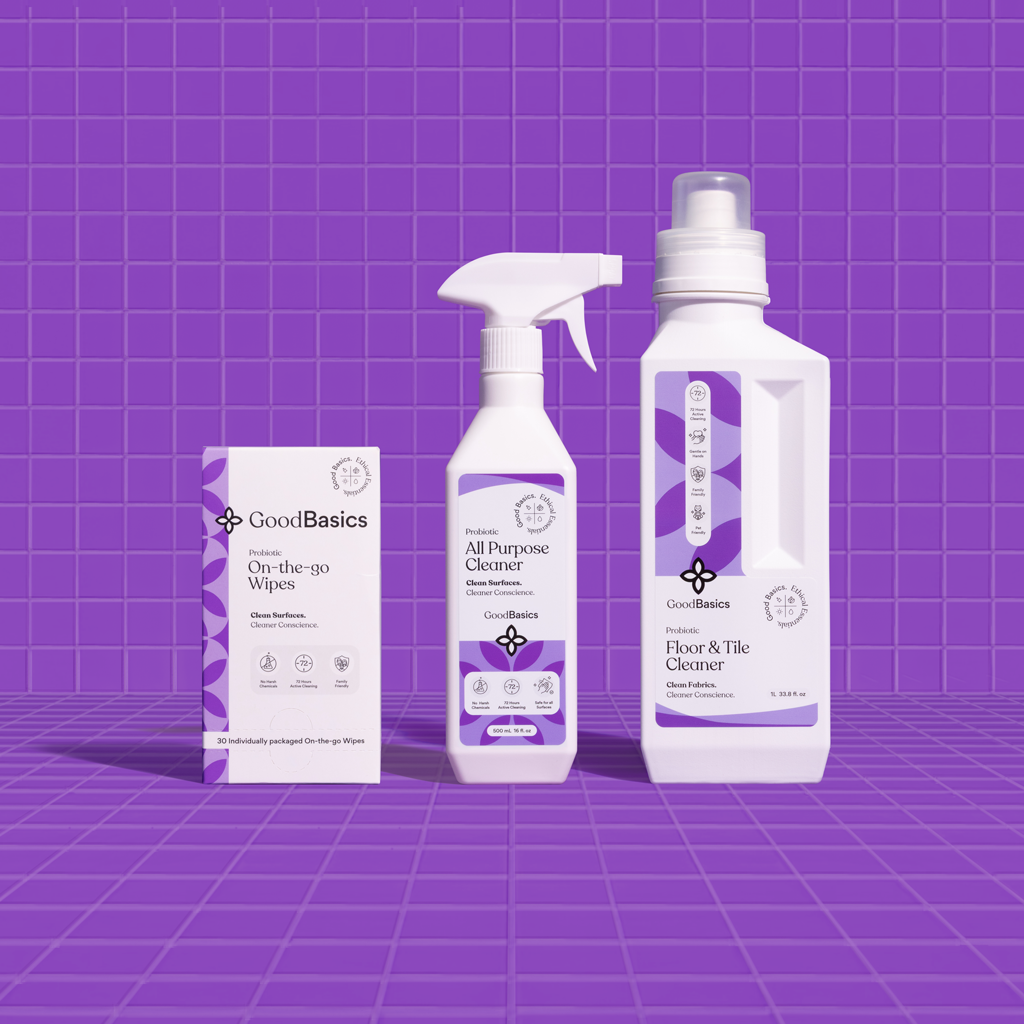
Understanding this seasonal shift is part of what grounds how we think about formulation at GoodBasics. Rather than treating every seasonal change in household microbial activity as something to eliminate outright, we think about supporting a home's underlying balance, working with the biological reality of the season rather than trying to hold it entirely outside the front door.
Spring is a season with its own biology, and understanding that biology is, we think, the first step toward cleaning with a little more intention.
References
Prussin, A. J. II, & Marr, L. C. (2015). Sources of airborne microorganisms in the built environment. Microbiome, 3, 78.
Meadow, J. F., et al. (2014). Indoor airborne bacterial communities are influenced by ventilation, occupancy, and outdoor air source. Indoor Air, 24(1), 41–48.
Dunn, R. R., et al. (2013). Home life: Factors structuring the bacterial diversity found within and between homes. PLoS ONE, 8(5), e64133.

Leave a comment
All comments are moderated before being published.
This site is protected by hCaptcha and the hCaptcha Privacy Policy and Terms of Service apply.