


Over the past few months, we have spent a lot of time looking inward. We have explored the gut, the skin, the immune system, the endocrine system, allergies and sensitivities, and the growing understanding that the products we bring into our homes can interact with the body in ways that are more complex than we once imagined. At the centre of many of these conversations has been the microbiome; the vast communities of microorganisms that live on us, within us and around us, participating in systems that help shape health, resilience and everyday life.

The microbiome has changed the way many of us think about the body because it has complicated an old and deeply embedded story – that bacteria are simply invaders, that microbial life is inherently dirty, and that health is best achieved by eliminating as much of it as possible. We now understand that the reality is far more intricate. Some microorganisms can cause disease, of course, and targeted disinfection remains essential in many contexts. But microbial life is also part of us, and we exist in constant relationships with organisms we cannot see, and many of those relationships are foundational to the living systems we depend upon.
For the next few editions of Clean Thinking, we want to take that understanding and widen the lens. If the microbiome asks us to reconsider the invisible ecosystems within and immediately around the body, what happens when we follow that thinking outward?
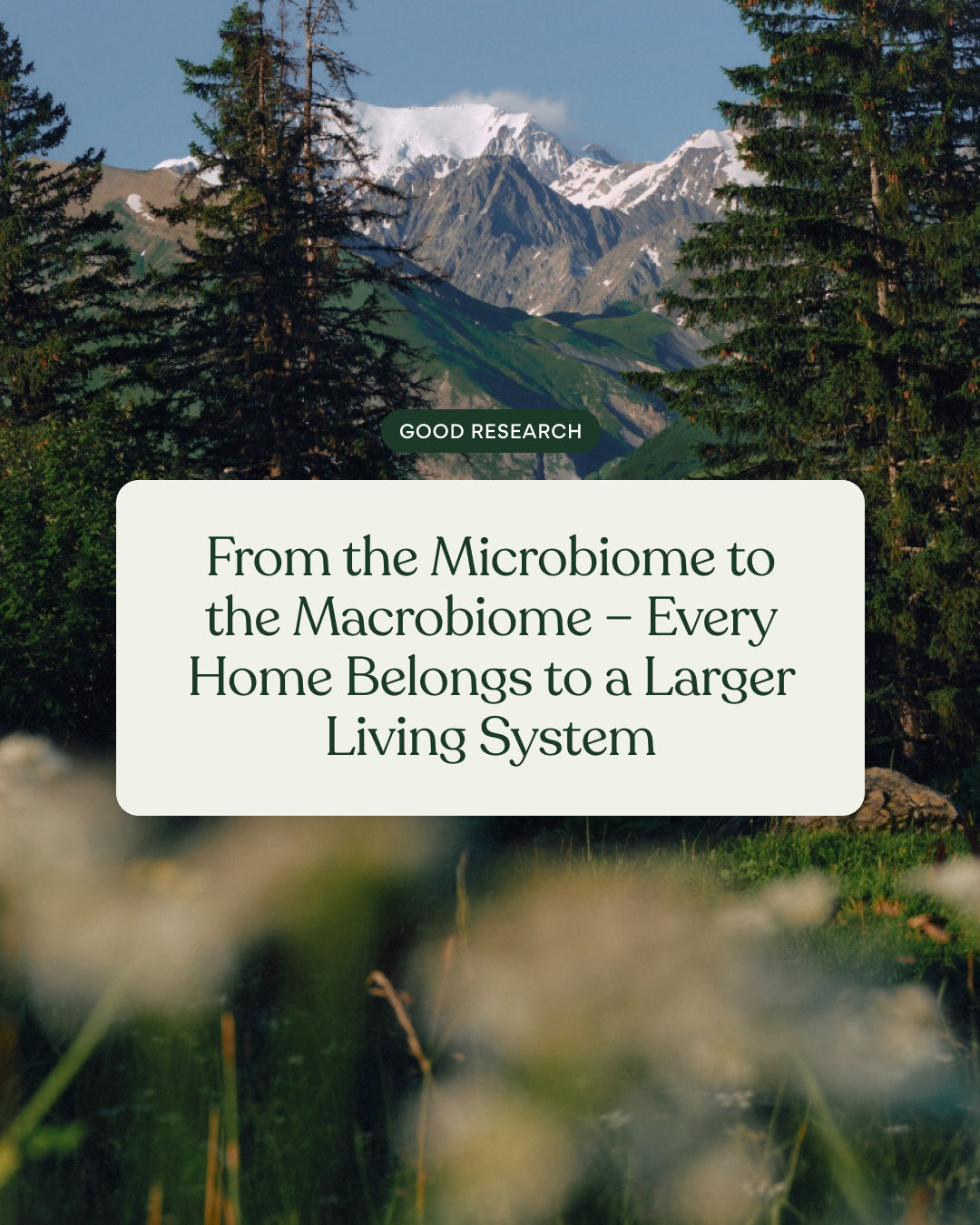
What might we begin to see if we consider the larger living systems into which our everyday choices flow: the soils, rivers, oceans, plants, animals and microbial communities beyond the home? We have begun thinking of this as a movement from the microbiome to the macrobiome: from the intimate ecology of the body towards the wider ecology of a living planet.

This shift matters because the home is not a closed system, although modern life often allows us to imagine that it is. Water arrives through a tap and disappears through a drain – the washing machine empties – and the toilet flushes. A bucket of used cleaning water is poured away, and once something has left our field of vision, it is remarkably easy to experience it as gone. Yet there is no true “away”. The substances that leave our homes enter sewer networks, septic systems and wastewater infrastructure. Depending on the chemistry involved and the systems receiving it, compounds may be broken down, transformed or removed to varying degrees. What disappears from the home enters another material reality.
This is where the story of cleaning becomes ecological. Every load of laundry, washed floor, cleaned toilet and rinsed sink exists within a much larger circulation of water and matter. Sophisticated science should determine whether a product works at the moment of use, and what happens after that moment has passed. Where do its ingredients go? How readily do they break down? What systems encounter them next? What does it mean to clean one environment if the burden of that cleaning is simply transferred somewhere downstream?

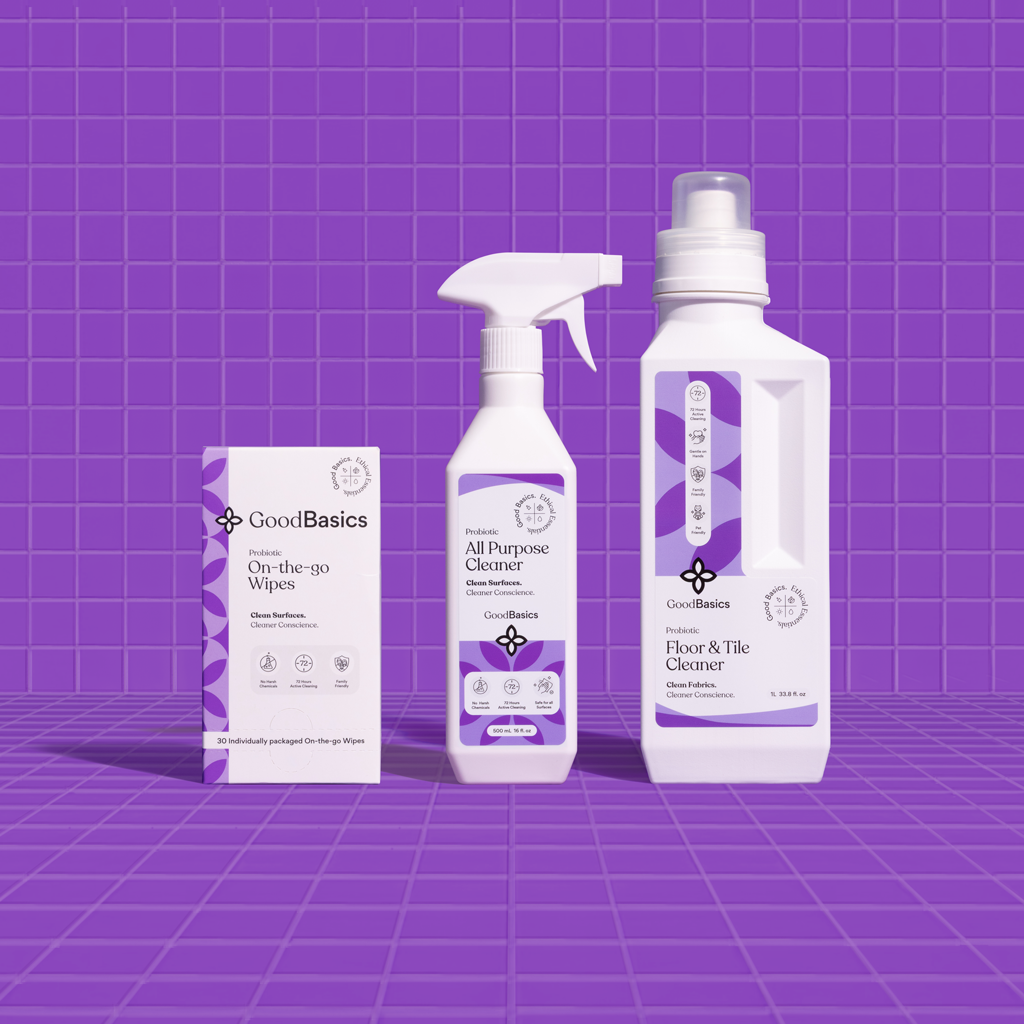
This is precisely why probiotic cleaning is so compelling to us, and why we remain committed to advancing it. It represents a fundamentally different way of thinking about what cleaning technology can do. It works with biological processes rather than beginning from the assumption that effective cleaning must depend on increasingly aggressive chemistry or indiscriminate microbial destruction.
For us, the promise of biotechnology lies in developing products that perform exceptionally well inside the home, and in asking whether the science of cleaning can become more intelligent about the larger living systems within which that home exists.
A truly sophisticated approach to clean should consider the full journey of a product, from the surface on which it is used to the environments it may eventually enter.
These questions become even more significant when we recognise that many of the systems receiving our waste are themselves alive. Microorganisms are not confined to the human gut or the surface of the skin. They live in soil, water and sediment; around the roots of plants and within vast ecological networks. They participate in decomposition and nutrient cycling, help transform organic matter and contribute to processes through which ecosystems function and regenerate. Even modern wastewater treatment often relies on diverse microbial communities to help break down organic matter and transform pollutants. The invisible life we have been taught to fear is, in many contexts, doing essential work.
We have inherited a language of killing, destroying and sterilising, often with little distinction between targeted hygiene and the indiscriminate removal of microbial life. There are contexts in which disinfection is vital, and there are pathogens that demand serious intervention. But a targeted tool should not necessarily become a total worldview; a healthy soil ecosystem is not sterile, nor is a living river sterile. The microbial communities involved in decomposition, nutrient exchange and wastewater treatment are part of the infrastructure of life.

For us at GoodBasics, this opens a larger conversation about what clean can mean. We believe the future of cleaning requires us to think beyond the visible surface and beyond the immediate moment of use. It requires an understanding that the body exists within the home, the home exists within an environment, and the environment is made up of interconnected living systems. Human health and ecological health may be discussed separately, but in practice they continually meet through the water we drink, the soil that grows our food, the air we breathe and the microbial worlds we inhabit.
Over the coming months, we want to explore these connections more deeply. We will follow the journey from sink to river, look at the microbial infrastructure of soil and water, consider wastewater as a living system and ask harder questions about where household chemistry goes once it leaves our homes.
We began with the microbiome because it invited us to see the body differently, and to share the benefits that feel most immediate and intimate to our everyday lives. Now, we are widening the lens, because understanding clean ultimately requires us to understand something larger: every home exists within a living world, and nothing we wash away ever truly disappears.

Leave a comment
All comments are moderated before being published.
This site is protected by hCaptcha and the hCaptcha Privacy Policy and Terms of Service apply.