




Last month,
we moved from the microbiome to the macrobiome. We began with the intimate microbial communities of the body and home, then widened the lens to recognise that every sink, washing machine, toilet and cleaned surface belongs to a larger circulation of water and matter. Our homes are deeply intertwined with the environments around them, and what leaves our homes enters other systems, and many of those systems are alive.
This month,
we want to look more closely at the microbial diversity that helps make those larger systems function. Beneath our feet and throughout rivers, wetlands, estuaries and wastewater systems exist vast communities of bacteria, fungi, archaea, algae, protists and other microscopic organisms. They are rarely visible to us, but their collective work is woven through decomposition, nutrient cycling, plant growth, water quality and ecological resilience.
When we speak about microbial diversity, we include the range of functions those organisms perform, their relative abundance and the relationships connecting them. A resilient microbial community is never built around a single heroic organism; like our own formulations, microbial communities are a network of different forms of life, each responding to particular conditions and contributing to the system in different ways.
Ecosystems
Ecosystems are required to perform many tasks at once, so this diversity is essential. Soil must receive and decompose organic matter, make nutrients available to plants, form stable aggregates, hold and filter water, and participate in carbon, nitrogen and phosphorus cycles; different organisms, different abilities and different relationships operating together.
Healthy soil is therefore not inert ground; it is a densely inhabited and alive environment. Bacteria and fungi help decompose plant and animal material, transforming it into forms that can re-enter living cycles. Microorganisms live around and within plant roots, where they can influence nutrient availability and plant health. Others contribute to the formation of soil structure or participate in the cycling of carbon and nitrogen.
The diversity of these communities helps soil continue functioning under changing conditions. When heat, drought, pollution, erosion or land-use change alters an environment, microbial communities may also change. The effects are complex and context-dependent, but the central principle is increasingly clear – microbial diversity is closely connected to the capacity of soil to sustain multiple ecological functions.
Waterways contain their own equally intricate microbial worlds. Rivers and wetlands are not simply channels carrying water across a landscape. They are living systems in which microorganisms interact with sediments, plants, animals, oxygen, nutrients and organic matter. Microbial communities help transform carbon and nutrients as water moves through these environments, contributing to the processes through which aquatic ecosystems continually renew themselves.
The same biological intelligence is used within wastewater treatment. Diverse communities of microorganisms help break down organic matter and transform compounds in used water before it is discharged or reused. Modern infrastructure may look mechanical from the outside, but much of its essential work depends on microscopic life.
This is where the relationship between household cleaning and ecological diversity becomes tangible. Every time we rinse a cloth, empty a bucket or run a wash cycle, the ingredients in our cleaning products begin another journey. They move through drains and treatment infrastructure, and may eventually enter soils, sediments or waterways directly or through treated effluent and biosolids. Different ingredients behave differently: some are readily broken down, some are transformed, and others may persist or affect organisms under particular conditions.
It would be too simple to say that one household product can either create or destroy the biodiversity of an entire ecosystem. Ecological systems are influenced by many pressures, including climate change, habitat loss, agricultural runoff, industrial pollution, sewage and the cumulative chemistry of everyday life. Still, complexity is not an argument for indifference – is a reason to design more carefully.
For us at GoodBasics, that means refusing to treat microbial life as an enemy by default. Conventional cleaning has often been framed through the language of killing, destroying and eliminating bacteria, even in ordinary settings where targeted disinfection is not required. This worldview overlooks a fundamental ecological truth: microbial life is not an incidental presence on the planet. It is an essential and foundational part of the infrastructure through which the planet functions.
Probiotic Cleaning Products
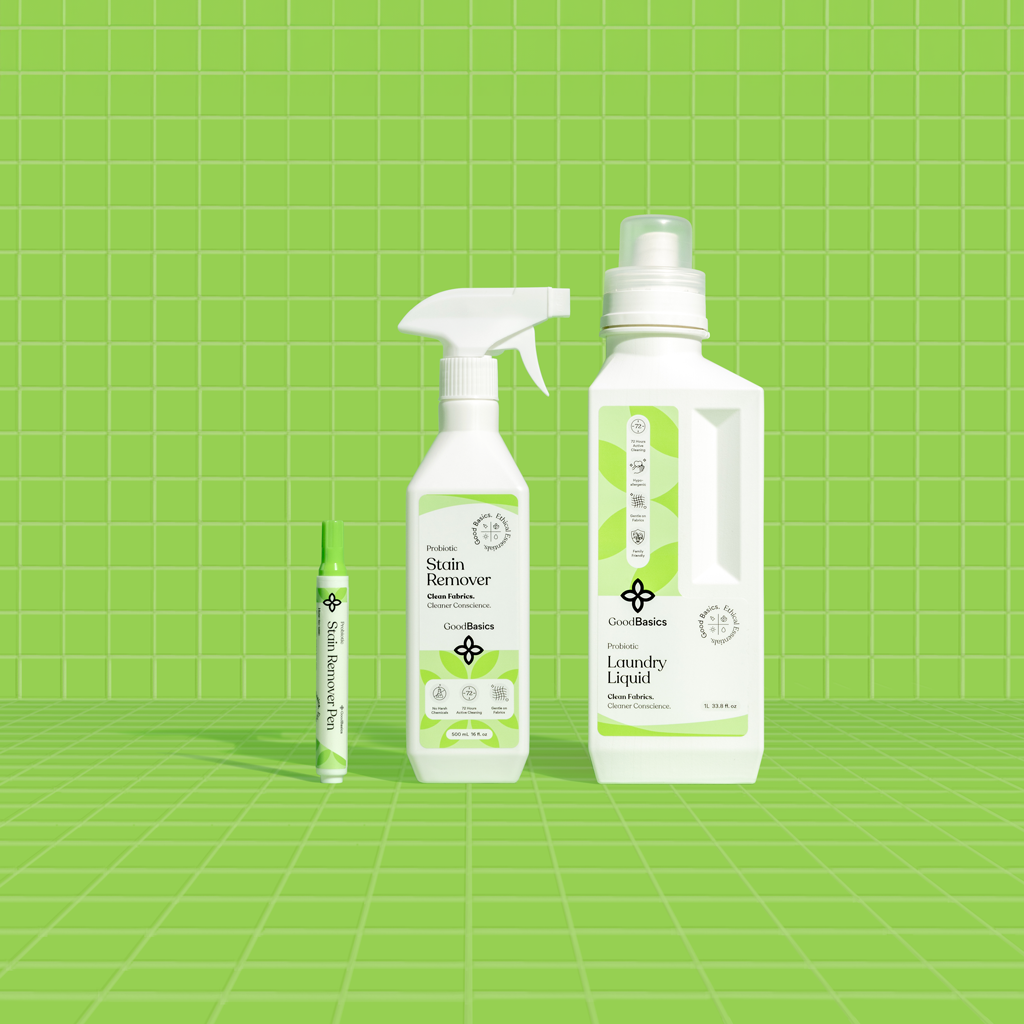
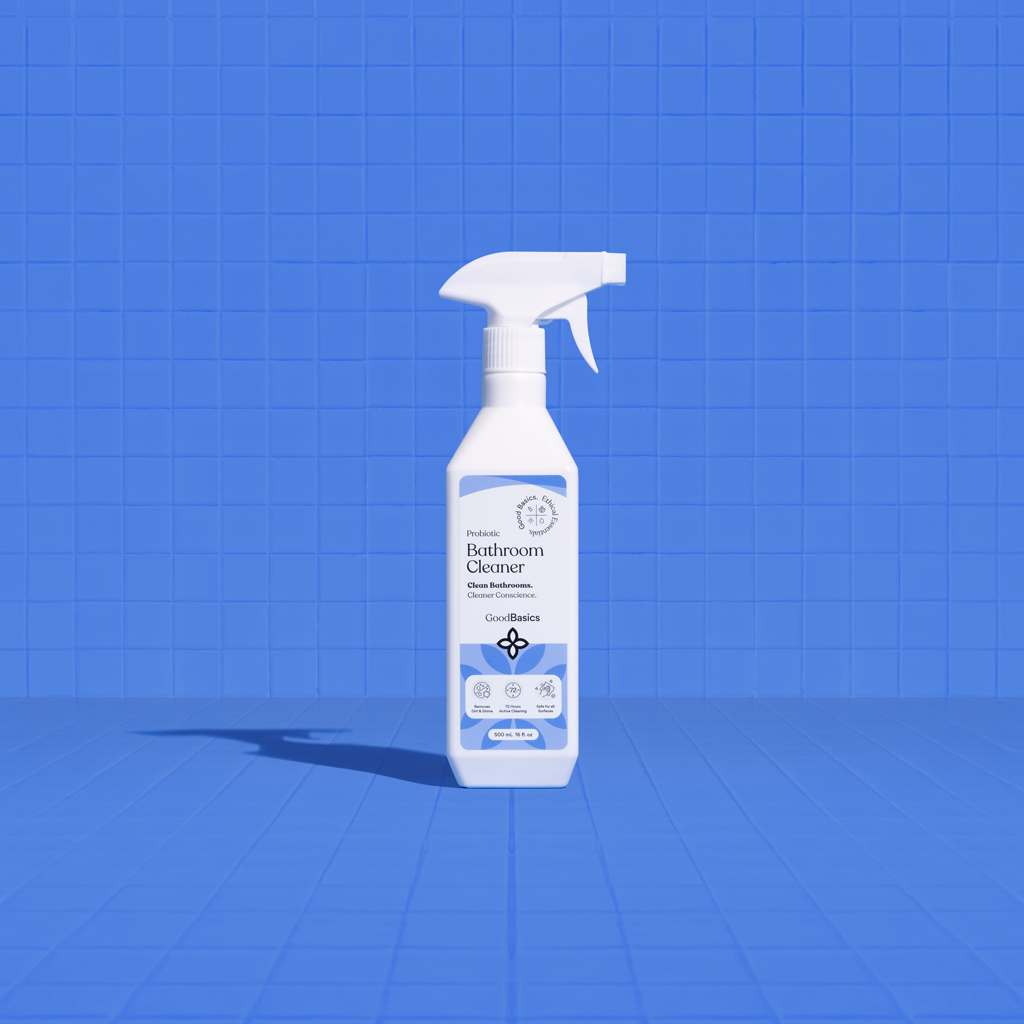
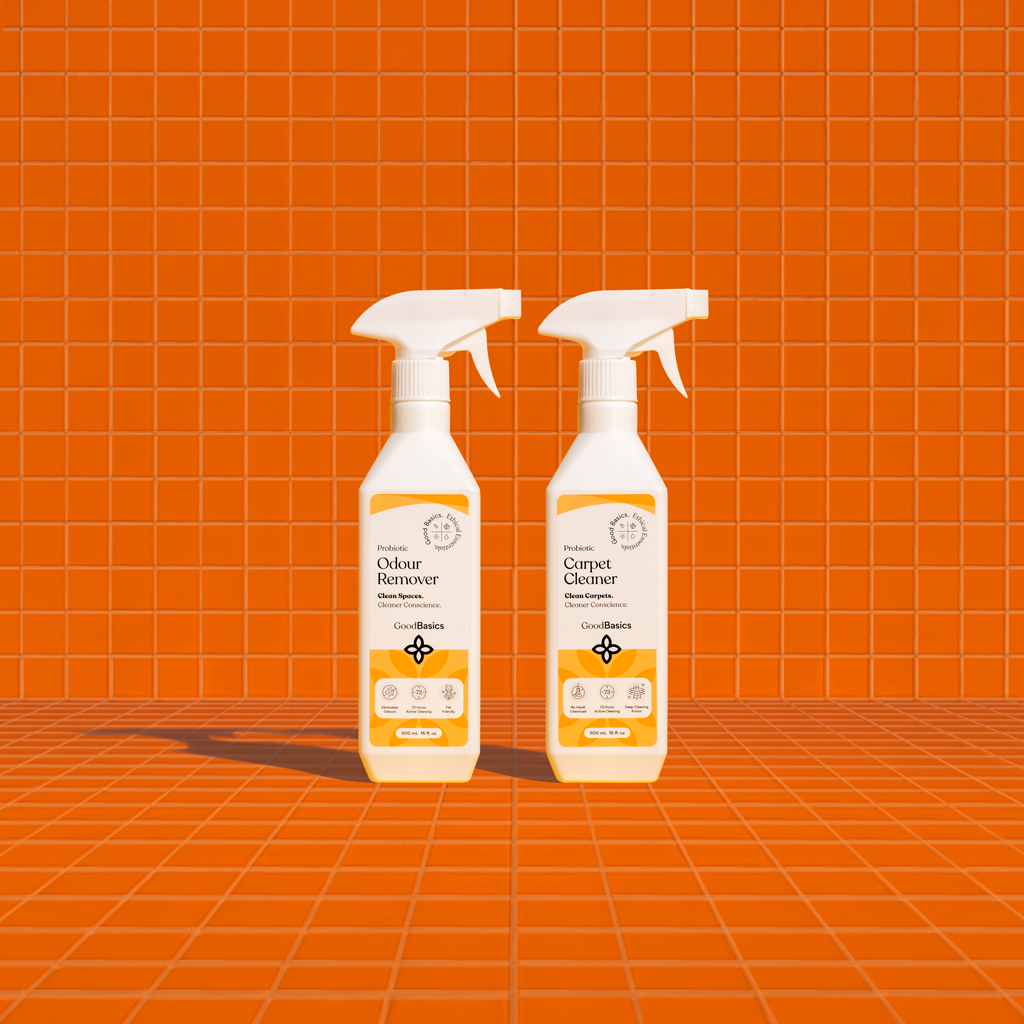
Our probiotically enriched cleaning products are designed to work with biological processes rather than relying on indiscriminate microbial destruction as the definition of efficacy. The beneficial microorganisms and enzymes in our formulations help break down organic matter on the surfaces where the products are used. At the same time, our wider formulation philosophy asks what happens beyond that surface, and whether effective cleaning can reduce reliance on unnecessarily aggressive chemistry and remain conscious of the living systems its ingredients may eventually encounter.
While we would certainly never claim that GoodBasics can manufacture biodiversity inside a river or restore a damaged soil ecosystem through cleaning alone. It is that our products are developed from a position of respect for microbial life, and we believe cleaning technology should achieve excellent performance while seeking to minimise unnecessary pressure on the microbial communities operating beyond the home.
This approach also helps reconnect two conversations that are often kept apart. Human health and ecological health are not separate projects. The soil that grows food, the water moving through landscapes, the microorganisms processing waste and the microbial communities living on and within our bodies are parts of a connected living world. Diversity at one scale supports resilience at another.
Microbial Diversity
To care about microbial diversity is to care about functions we rarely witness but continually depend upon; a fallen leaf returning to soil, nutrients becoming available to roots, organic matter being transformed in a wetland, or wastewater being biologically processed before it re-enters a larger cycle.
At GoodBasics, this is why widening the lens matters. A more ecologically intelligent definition of clean considers the surface in front of us, the water beneath it, the soil beyond it and the diverse microbial communities holding those systems together. The smallest life supports our largest living systems, and what we choose to clean with should be designed accordingly.
The organisms performing this work may be microscopic – but their importance is planetary.





Leave a comment
All comments are moderated before being published.
This site is protected by hCaptcha and the hCaptcha Privacy Policy and Terms of Service apply.