


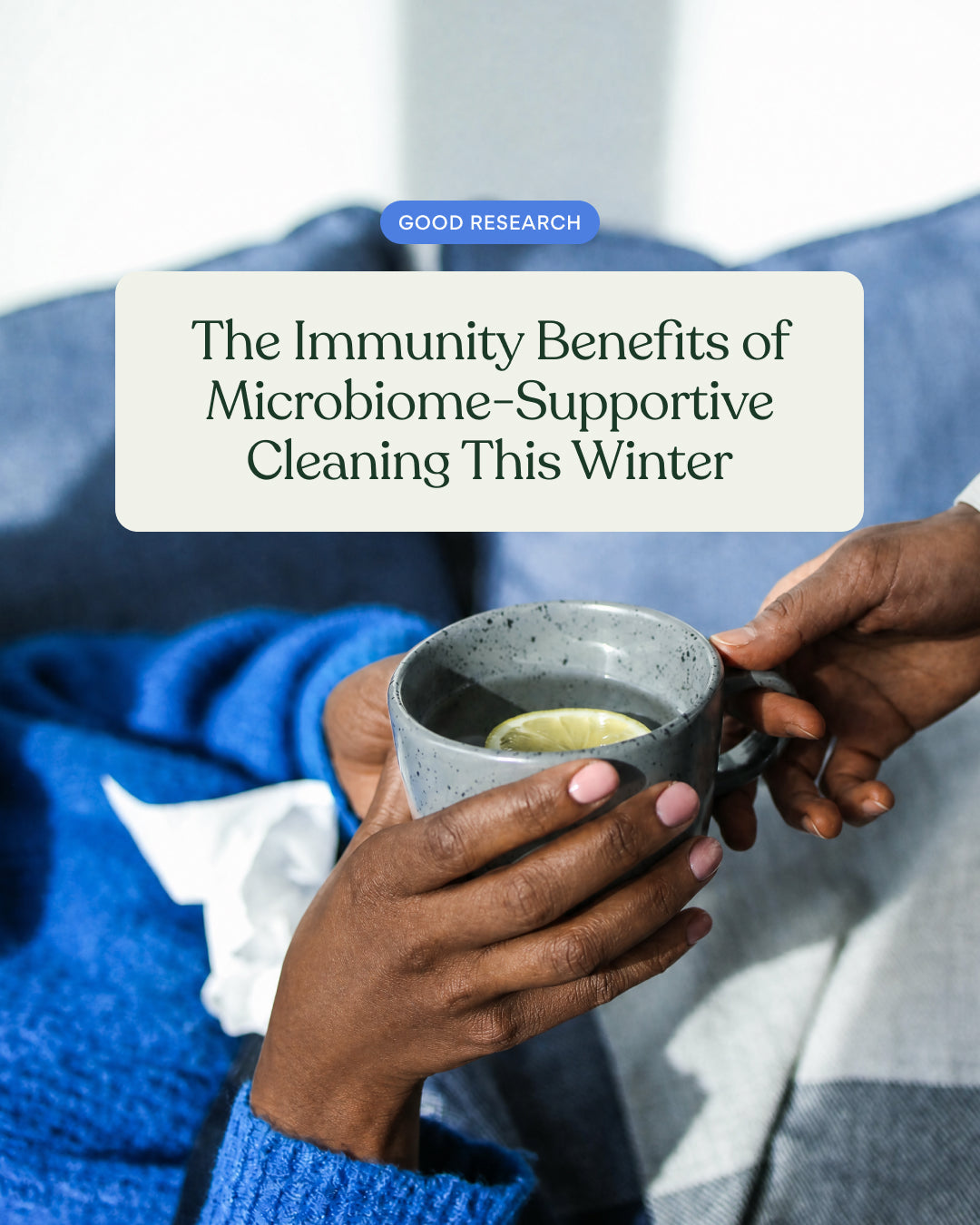
As winter settles in, we’re instinctively turning our attention toward immunity. From our supplement routines, to brewing herbal teas, prioritising sleep, and searching for ways to support the body through colder months marked by increased illness, dry indoor air, lower energy, and more time spent indoors; this is the season of returning to the foundations of wellbeing.
At GoodBasics, we know that one of the most overlooked contributors to immune resilience may already exist within the spaces we spend the majority of our lives in; the microbiome of the home itself. We continue to speak at length about how we have been taught that a “healthy” home is one that smells aggressively chemical, appears clinically sterile, and eliminates all traces of microbial life, because we know how deeply this idea has been conditioned into our culture.
Research is recognising that the complete sterilisation of indoor environments may actually disrupt many of the delicate ecological systems both our homes and bodies rely upon to function optimally, and we believe that how we clean our homes this winter should absolutely focus on cultivating healthier ecosystems; both human and environmental.
The human immune system is incredible. From birth, we exist in continual relationships with trillions of microorganisms that live on our skin, within our gut, throughout our respiratory system, and across the environments we inhabit every day. These microbial communities actively help regulate inflammation, support skin barrier integrity, assist immune signalling, influence digestion, and contribute to the body’s ability to respond appropriately to external stressors.
In many ways, immunity is not entirely about eliminating all microbes or pathogens; instead, it hinges on maintaining balanced relationships with the right ones in our bodies and homes. Research increasingly suggests that reduced microbial diversity within modern indoor environments may contribute to immune dysregulation, inflammatory conditions, and heightened sensitivities. This becomes especially relevant when considering how modern homes are often sealed off from natural microbial exchange while simultaneously being saturated with harsh antimicrobial products. Excessive sanitisation may strip away beneficial microbial populations while exposing the body to ingredients that can irritate the lungs, skin, and endocrine system over time.
The winter months intensifies these conditions significantly. During colder months, our windows remain shut for longer periods, ventilation decreases, dampness increases, and we spend substantially more time indoors. The air becomes drier, circulation slows, and indoor ecosystems become more concentrated. In this context, the products we use inside our homes matter profoundly. Cleaning products containing bleach, ammonia, synthetic fragrances, and volatile organic compounds (VOCs) can linger within enclosed environments, contributing to indoor air pollution at precisely the time when respiratory systems are already under seasonal strain.

From damp laundry, muddy shoes, increased indoor cooking, pets spending more time inside, reduced airflow, and heavier use of enclosed living spaces all create conditions where imbalance can emerge more easily. Conventional cleaning often responds to these realities by escalating chemical intensity, but this can create a cycle of continual disruption rather than long-term resilience. Stronger chemicals do not necessarily create healthier homes; they may simply create harsher environments.
Antimicrobial resistance (AMR) is another pressing issue that microbiome-supportive cleaning addresses. Considered one of the most significant global health challenges of our time, modern medicine depends profoundly on effective antibiotics. Procedures we now consider routine from surgeries and C-sections to cancer treatments, organ transplants, and the treatment of pneumonia or infected wounds all rely on the ability to control bacterial infection successfully. This is why, when you’re prescribed antibiotics by your GP, you are cautioned to complete the full course of treatment; because stopping prematurely may allow stronger, more resistant bacteria to survive, adapt, and continue multiplying. Over time, this contributes to the emergence of microorganisms that no longer respond effectively to the medicines designed to treat them.
One of the major drivers of AMR is overexposure to antimicrobial substances across medicine, agriculture, industrial systems, and consumer products. The more frequently microorganisms are exposed to antibiotics and antimicrobial compounds, the more opportunity they have to adapt and evolve survival mechanisms. Over time, stronger and more resistant strains survive while weaker ones are eliminated; a process known as selective pressure. This is why the conversation around AMR has expanded beyond hospitals and pharmaceuticals into broader discussions about ecology, microbial balance, and our cultural relationship with sterility itself. Increasingly, we need to be asking whether an indiscriminate "kill everything” approach may contribute to microbial imbalance in ways we are only beginning to fully understand.
Importantly, this does not mean abandoning hygiene, avoiding antibiotics when medically necessary, or rejecting disinfection in high-risk settings. Antibiotics remain life-saving and essential. Rather, the AMR conversation recognises that long-term resilience depends on preserving healthier microbial ecosystems wherever possible. In this regard, we believe that the way you clean can have direct implications for healthier homes, healthier bodies, and a healthier relationship with the microbial world around us.
This is part of what makes microbiome-supportive cleaning so incredible; it works by introducing beneficial bacterial competitors into the home environment. Probiotic enriched formulations help manage microbial imbalance at the ecological level; creating healthier microbial communities that naturally compete against undesirable overgrowth through biological processes already found throughout nature.
By supporting healthier indoor ecosystems, reducing exposure to inflammatory chemical compounds, and preserving the integrity of the body’s natural protective barriers, microbiome-supportive cleaning creates environments that are more aligned with how the immune system naturally functions; through balance, adaptation, and ongoing communication with the microbial world around us. It also creates the conditions for pathogenic bacteria; like those associated with illness and microbial imbalance; to thrive far less easily.
Winter naturally invites us inwardly, and it asks us to slow down, gather, restore, and care more intentionally for ourselves and the spaces we inhabit. This season, we’re aiming to opt out of overreliance on antibiotics to solve all our bacterial challenges, alongside unnecessary aggressive chemical disinfectants in the home, and instead we’re focusing on nurturing environments capable of supporting life and health more intelligently.



1 comment
vqjrqvsmod
pmttjonnvgvwpmssphsjuerrrkvsmu
Leave a comment
All comments are moderated before being published.
This site is protected by hCaptcha and the hCaptcha Privacy Policy and Terms of Service apply.