


Hormonal health is key to human health, and while the popularisation of wellness has brought attention to this topic, it’s important to emphasise just how precise and sensitive the fine-tuning of our hormonal system actually is. Hormones operate in minute quantities, yet regulate some of the body’s most fundamental processes; mood, metabolism, sleep, fertility, and stress response.
Small signals, with mighty consequences.

In both male and female physiology, this system is constantly calibrating itself through a dynamic interplay between the brain (hypothalamus and pituitary), the thyroid, adrenals, and reproductive organs. In men, hormonal rhythms tend to be more stable day-to-day, with testosterone following a relatively consistent cycle. In women, hormonal patterns are more cyclical, shifting across the menstrual cycle in a way that affects energy, mood, cognition, and physical state. While differently timed, and differently expressed, what these physiologies share is a reliance on precise signalling, and a system that depends on clarity, timing, and balance.
This is where environmental exposure becomes consequential to our health. The air we breathe, the surfaces we touch, and the products we use all form part of the chemical environment the body must interpret and respond to. When external compounds begin to mimic, block, or interfere with hormonal signals, they enter into that system; reshaping or outright dominating its rhythms over time, and potentially leading to all sorts of harmful health outcomes.
We need look no further than a landmark study that recently came to the fore in South Africa. A 2026 study conducted by the University of the Free State (UFS) found endocrine-disrupting chemicals (EDCs) (including phthalates, parabens, and bisphenols) in every sanitary pad and pantyliner tested. Published in Science of the Total Environment, the research identified at least two EDCs per product, even in those labelled “chemical-free.” While the levels detected are below what’s considered immediately harmful, what the study points to is the reality of ongoing, everyday exposure. It brings the issue closer to home, quite literally, and as you’ll know, we’re all about bringing it home; the health of your home is kind of our thing.
So, when we look at how modern life is saturated with chemistry designed to perform, we begin to see how deeply this is woven into the everyday. From preservation to fragrance to disinfection, many compounds are engineered to do very specific jobs, and while performing their task, they interact with us, too.
At the centre of this is the endocrine system; a network of glands and hormones that regulates mood, metabolism, sleep, fertility, and more. Hormones act as messengers, travelling through the body and binding to receptors to trigger precise responses. For this system to function well, those signals need to be clear and well-timed. When outside chemicals interfere (by mimicking hormones, blocking them, or altering how they’re processed) the system can become disrupted. These substances are known as endocrine-disrupting chemicals (EDCs).
 As the UFS study shows, EDCs can be found in surprisingly intimate, everyday products. They’re also common in household cleaning products. In cleaning, they frequently appear as part of a broader chemical mix, particularly through volatile organic compounds (VOCs). VOCs are chemicals that easily evaporate at room temperature, which means they move quickly from surfaces into the air we breathe. They’re often responsible for that strong, “clean” scent associated with many products; you know, that familiar note of “freshness” we’ve been taught to associate with cleanliness, even though it’s often just the trace of harsh chemicals at work.
Some VOCs, like formaldehyde, benzene, and certain phthalates, have been linked to endocrine disruption, along with respiratory irritation and longer-term health concerns. What makes them tricky is that they linger, and indoors, where ventilation is limited, these compounds can build up, creating a constant, low-level exposure, and unlike something immediately toxic, endocrine disruption tends to be subtle.
The cumulative consequences work over time, through repeated contact, and then there’s also the question of skin contact; which we discussed at length in this article here. Many of these chemicals can pass through the skin and enter the bloodstream. When we’re cleaning (handling sprays, liquids, or residues) this becomes another pathway of exposure alongside what we inhale, and can contribute to imbalances that might show up as fatigue, mood changes, fertility challenges, or shifts in metabolism.
Exposure comes from many different sources.
It’s often difficult to trace back to a single cause, so while you may not trace your fatigue, mood shifts, or hormonal fluctuations directly to your cleaning products, our vision has been to ask; why continue to risk it, when a better way of cleaning already exists?
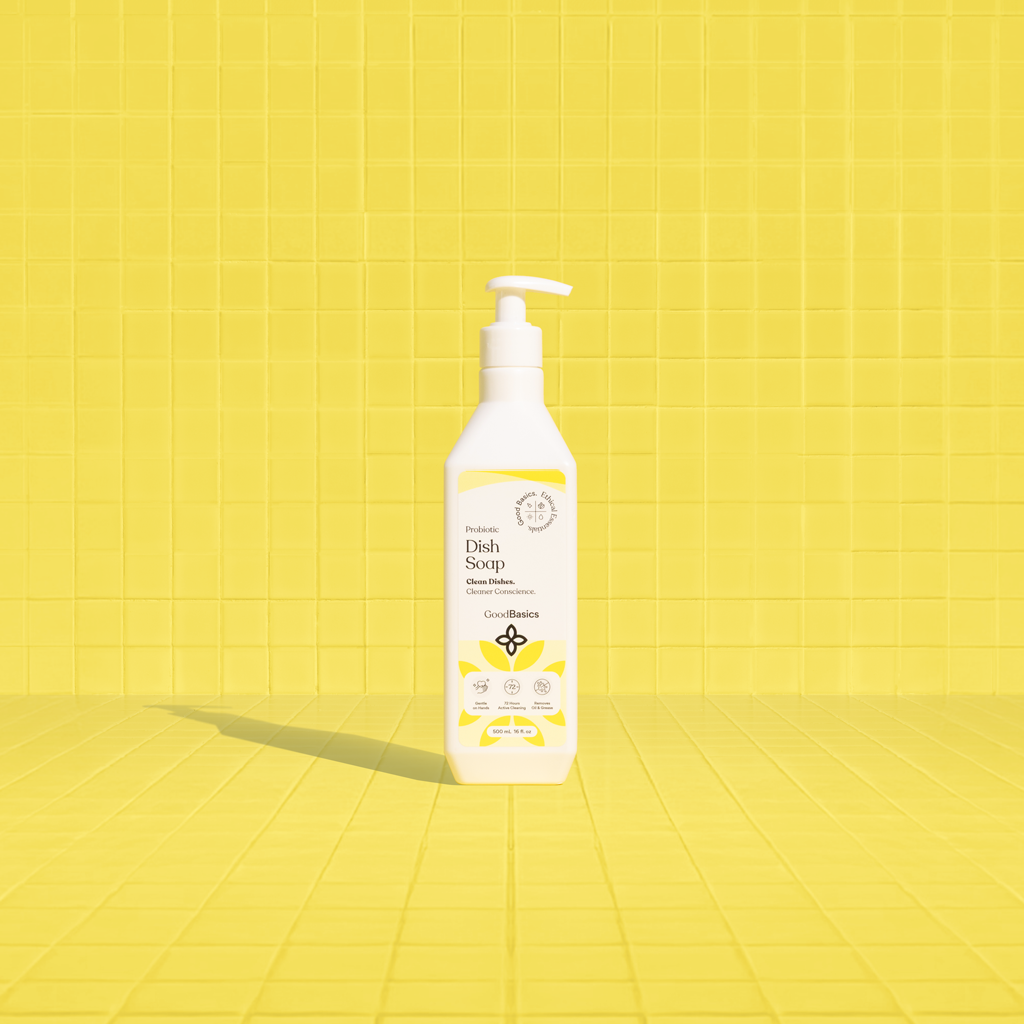
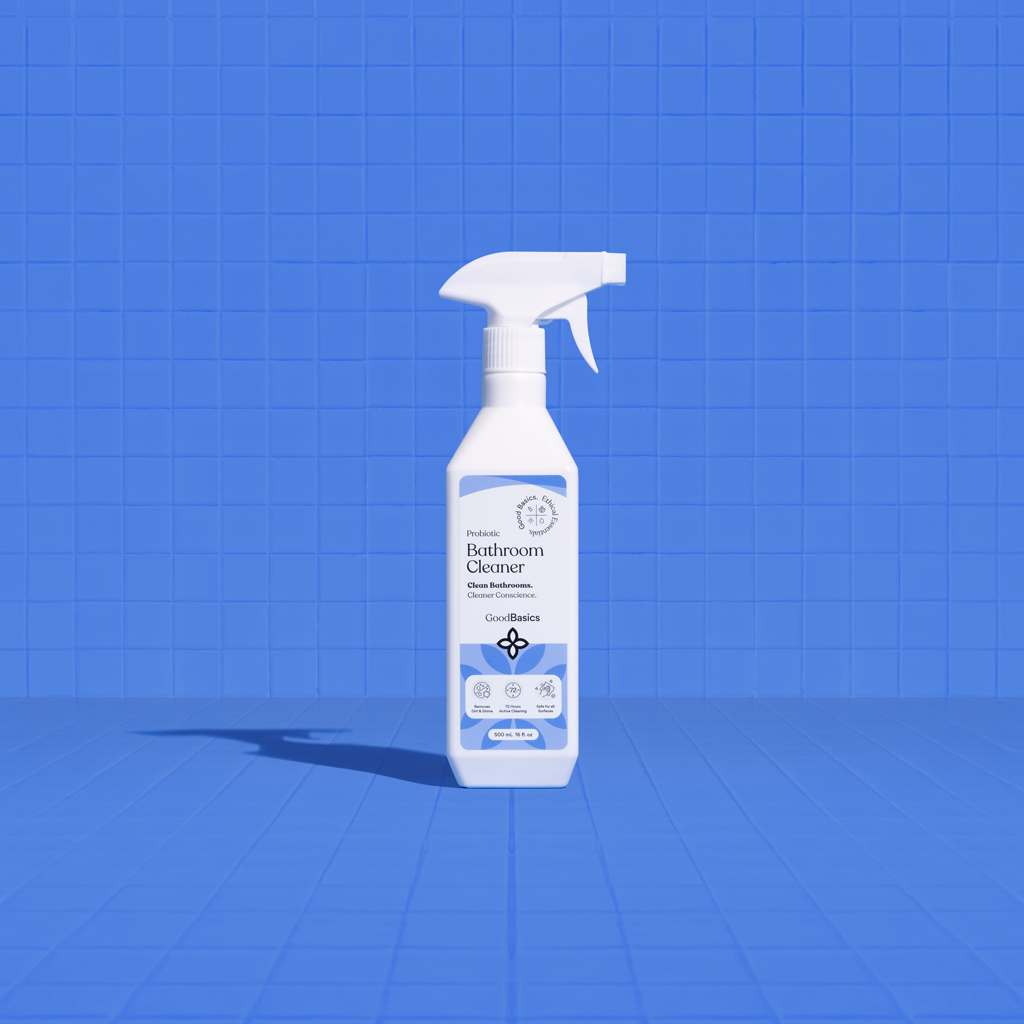
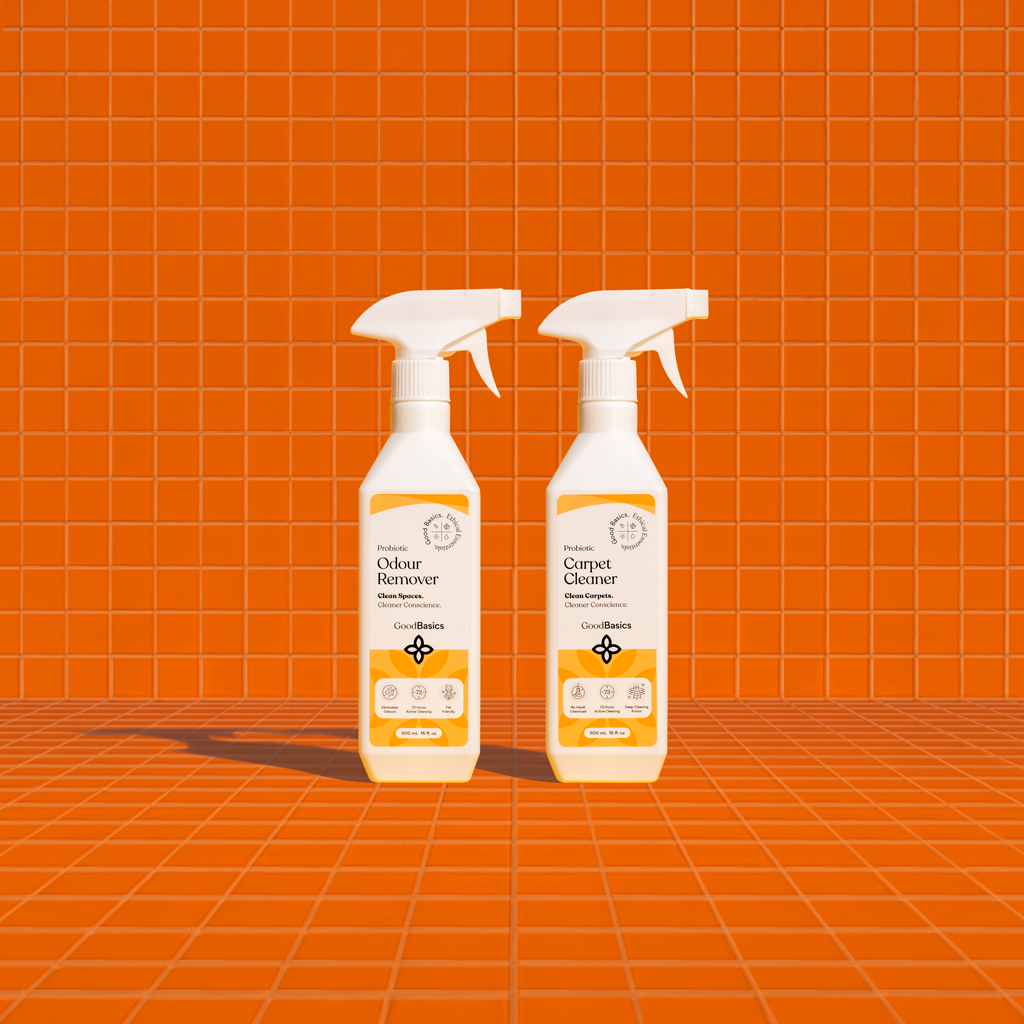
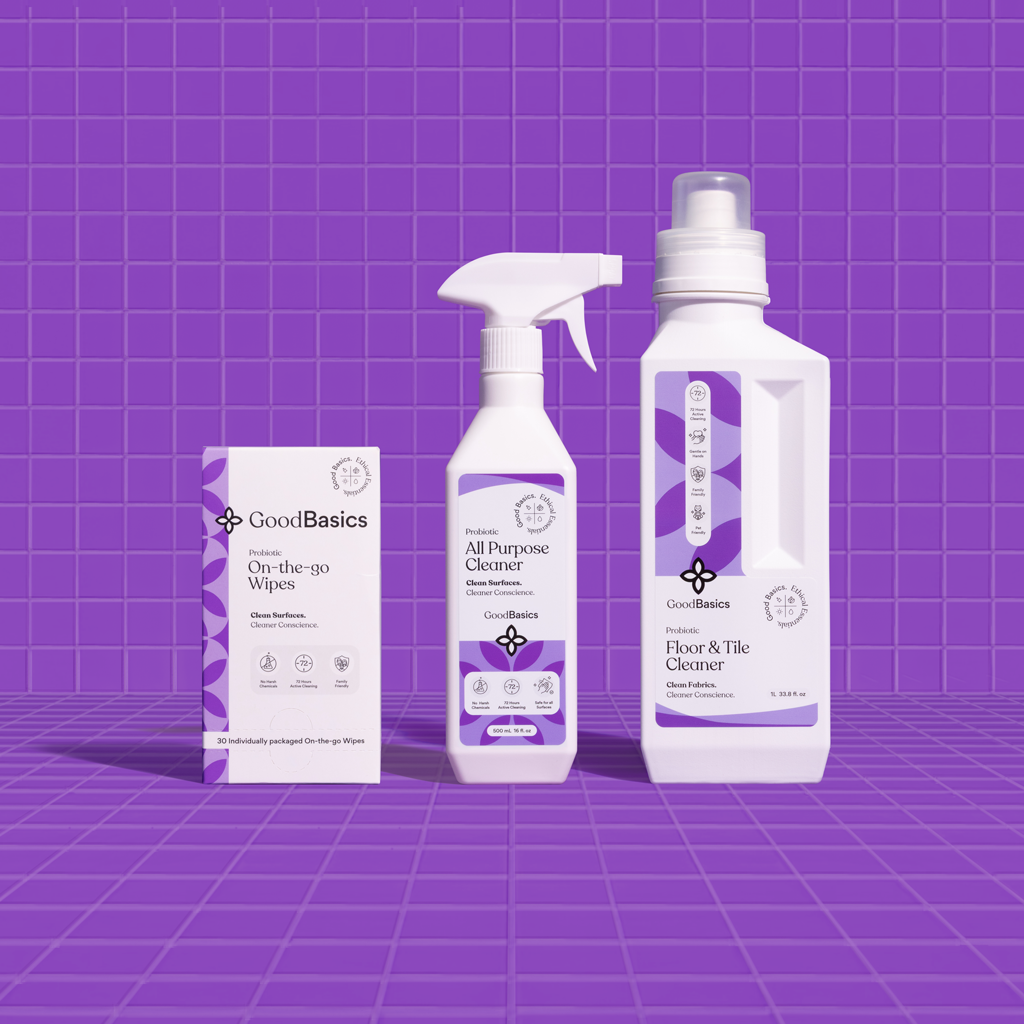
The probiotic-enriched, microbiome-supporting cleaning products that we develop take a different route. Instead of relying on harsh chemicals, they use beneficial bacteria in a dormant form that activates when it comes into contact with moisture. Once active, these microbes produce enzymes that break down organic matter at a very fine level. Rather than masking odours or chemically forcing dirt to dissolve, they digest the source of the mess. This creates a longer-lasting clean that continues working after application.
Importantly, this process doesn’t release harmful VOCs or introduce endocrine-disrupting chemicals into the environment. As this approach is biological rather than chemical, it doesn’t interfere with the body’s hormonal systems, nor do they mimic hormones, block receptors, or disrupt signalling. Instead, it supports a more balanced environment; one that sits more comfortably alongside the body’s own processes.
At GoodBasics, we offer the ability to switch out VOCs and endocrine-disrupting chemicals, and in doing so, to minimise a really key pathway of exposure; all in a day’s clean. It's kind of a no-brainer.


Leave a comment
All comments are moderated before being published.
This site is protected by hCaptcha and the hCaptcha Privacy Policy and Terms of Service apply.